

What Do You Do In An Anime Clud
Mostly-speaking, an "anime club" is an organization, often centered around a higher or university, focused on showing, promoting, and discussing anime. In the past, they were a staple of the fandom. Fans got together and organized clubs not only because joining forces with similar-minded fans is fun, but because anime itself was difficult to obtain.
The history of anime clubs has a similar genesis that of the Japanese otaku community. The earliest recorded anime gild, the Cartoon/Fantasy Organization (C/FO), began equally a spin-off group from a scientific discipline-fiction club, much similar how many early otaku got into anime through sci-fi. The C/FO began corresponding with sci-fi fans in Japan, with whom they would trade VHS tapes: Their Star Expedition and Battlestar Galactica for the Japanese fans' anime.
.avi_snapshot_23.36_[2016.04.05_19.05.16].jpg](https://images.squarespace-cdn.com/content/v1/5973f8c1197aea04d1c553e7/1503973058381-F5QDS7CKEWNEZ1VD5L95/Otaku+no+Video+OVA+-+01%28Sub%29%28DVD%29%5BA-Et%5D%281982%29.avi_snapshot_23.36_%5B2016.04.05_19.05.16%5D.jpg)
Information technology bears mentioning that, at the time of the C/FO's rise, in that location was no anime market in the United states of america. Nigh textile was obtained through legally-dubious means, often VHS-recorded TV broadcasts which were so copied and distributed. Though the C/FO made efforts to convince Japanese production companies (Namely Toei Animation) of the beingness of an American market for anime, a combination of high barriers to entry and a failure to sell their animation properties to American studios acquired their efforts to ultimately fail by the early 1980s.
Throughout the 1980s, small-scale companies would occasionally license anime works, edit them heavily, and release them as children's cartoon movies. Despite this practice, anime fans were inspired to become their hands on the original Japanese works the edits were based off of.
The practice of fansubbing (Using computer hardware and software to encode subtitles onto a VHS tape) is too closely related to anime clubs. The first known fansub came out of a C/FO chapter situated almost an Air Force base in Japan. The do of VHS fansubbing would keep through the late '80s and well into the 1990s, coinciding with the ascension of American licensing firms and the birth of a existent American anime industry.
Put just, anime clubs were instrumental to the ascension of the anime industry in the West and without them, the medium would never take found success here.
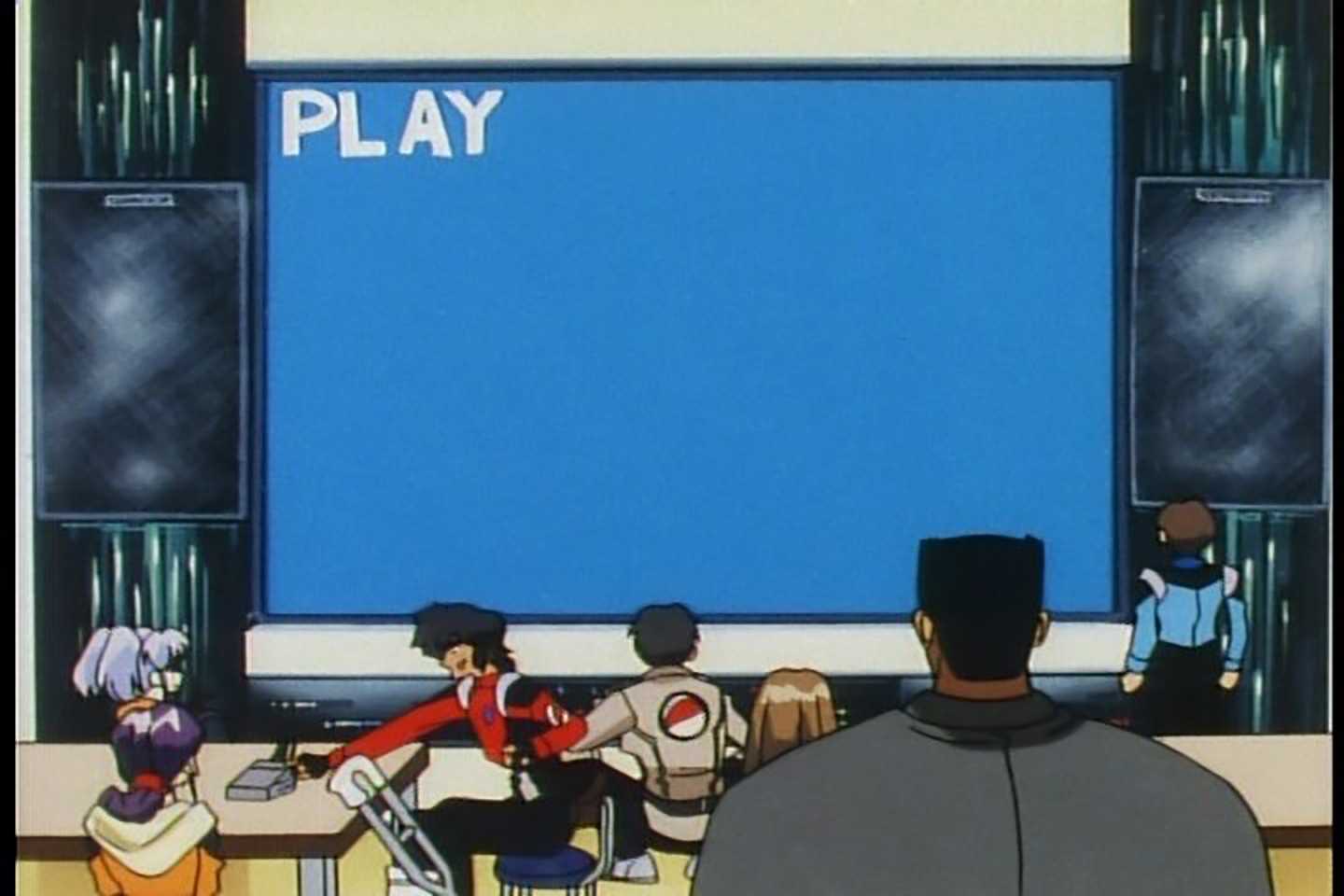
But that raises a question: If, in the past, anime clubs were not just instrumental, but necessary for people who wanted to get their hands on anime, what purpose exercise they serve in today'south age, where a quick visit to Crunchyroll or fifty-fifty Netflix yields a wealth of anime, ripe for consumption?
The internet historic period caused a massive paradigm shift, not simply for anime, only for media in general. In a relatively brusque time, we've gone from waiting for disc releases years after a show's original Japanese airing, to Crunchyroll subtitled streaming releases simultaneous with the Japanese broadcast. Farther, companies like Aniplex and Pony Canyon have fix upwards shop in the U.s., and Funimation is somehow managing to pull off simulcast dubs.
Unlike the 1970s and 1980s, there is no lack of content for anime fans to peruse, and it'due south all very easy to get. While the market place began with a lodge in LA mailing tapes dorsum and forth with Japan, now nosotros're absolutely swimming in anime.
We've come a very long fashion, but where does that leave anime clubs?
It'southward certainly easy plenty to find and watch anime on one's own, and while at that place'southward something to be said about the experience of watching anime with others, that'due south a significant reduction of the anime club's role from back when the concept was established.
While anime clubs of by eras existed to provide content, anime clubs of the current era have a duty to provide context.
Look at anime conventions. Screening rooms, more prominent in by decades when obscure anime was very difficult to obtain, have given way to panels and lectures, where fellow anime fans stand up on a stage and speak on diverse topics to their audition. Every bit content becomes less scarce and, in a sense, less valuable by itself, context and perspective come in greater demand, peculiarly when talking in terms of anime, videogames, and other nerd media.
Ideally, the modernistic anime club is a cultural exchange committee, where a group of fans, all steeped in anime and otaku civilization to diverse degrees, share context and perspective with one some other, and share context and perspective with the customs.
Viewing the anime club every bit just a lodge that watches cartoons devalue the concept's rich history and deep ties to the anime manufacture and anime fandom. It takes only as much to manage a modern anime club every bit it takes to manage whatever socially- or politically-agile group on, say, a higher campus. Even so, while many of those groups have a very articulate mission and direction, the very open nature of the "anime order" concept is difficult to manage.

Strong leadership is a must for the modern anime guild. Without articulate management, it's easy to fall into a complacent habit of elementary consumption. Decisiveness, charisma, knowledge of the medium, and, higher up all else, true passion for anime are all qualities of a skilful anime society president. The leader needs to exist able and willing to push the club in a positive direction, by any means necessary.
An anime guild's leader must exist willing to skirt the rules, or accept a "better to ask forgiveness than ask permission" attitude to advance the gild. He or she has to be a little bit crazy, and has to take anime way too seriously.
In that location is no room for negativity, bigotry, or shame in the modern anime club'due south leadership. There is no room for people with a hatred of any attribute of the medium, be it ecchi, yaoi, yuri, harem, loli, moé, or even hentai. That isn't to say that they can't have preferences, but they must be prepared to watch anime they dislike if the screenings are determined democratically.
The leader of the modern anime order must exist armed with both the noesis and the intestinal fortitude to exist able to put into context elements of the medium that might seem questionable to outsiders.
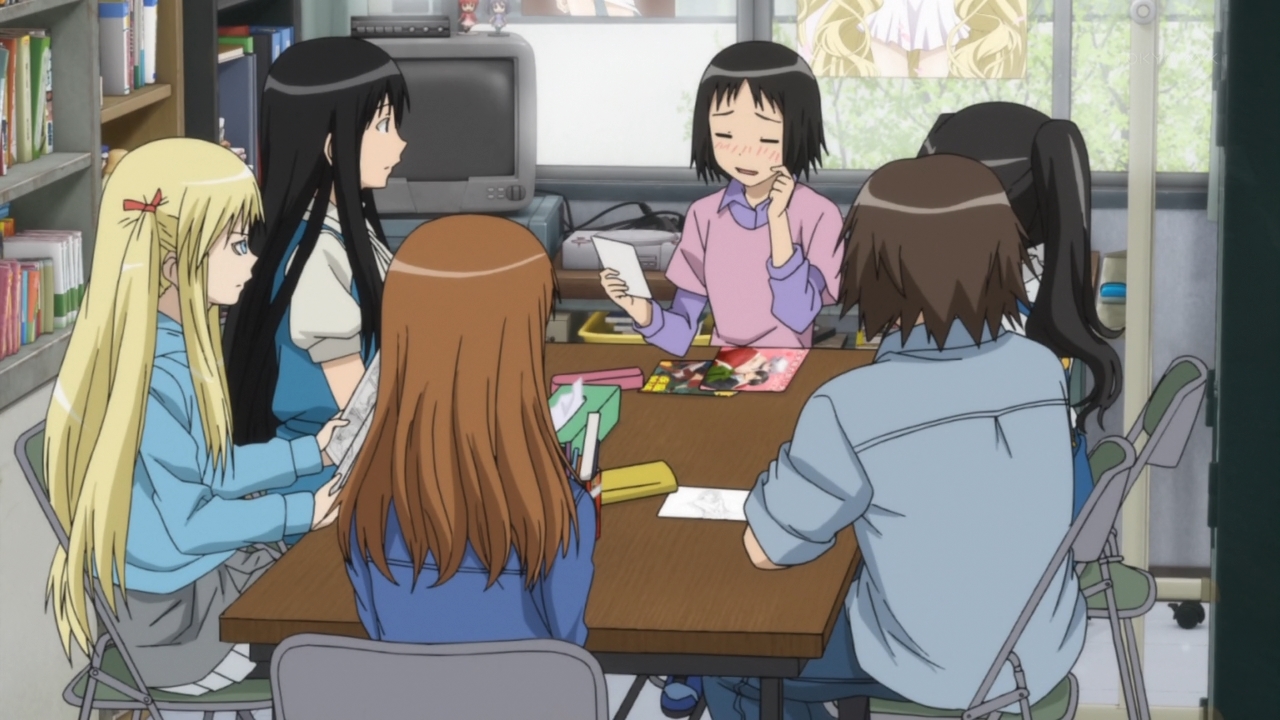
![[Exiled-Destiny]_Genshiken_2_Ep06_(1B1B178C).mkv_snapshot_05.23_[2016.04.05_18.46.12].jpg](https://images.squarespace-cdn.com/content/v1/5973f8c1197aea04d1c553e7/1505672532993-42KMB79THYYFSJBAMP65/%5BExiled-Destiny%5D_Genshiken_2_Ep06_%281B1B178C%29.mkv_snapshot_05.23_%5B2016.04.05_18.46.12%5D.jpg)
Noesis tin exist taught, but passion and courage need to come from within. The modern anime fandom has the luxury of beingness able to be dispassionate. In the '70s and the '80s, getting anime to watch was an act that required passion. Now, with anime just as easy to obtain as any other media, it's however just as of import to take passionate leaders in the fandom because, while those who but desire content can eventually exist satisfied, those who desire context know no terminate to their thirst for more and more knowledge and perspective.
This is where the modernistic anime club comes in. In an era where anime is trivially easy to get, it'due south no longer enough to simply have a communal infinite where people get together and scout anime. The role of the anime social club must expand, both in depth and breadth, to explore the medium much more deeply and the culture surrounding information technology much more broadly.
I'm reminded of the manga and anime Genshiken, where a higher lodge spins off from the schoolhouse's anime and manga clubs to course a general-purpose lodge for otaku. Desiring to explore otaku culture as a whole, rather than beingness boxed into a medium, and preferring to discuss manga and anime from a consumer's perspective rather than a creator'southward perspective, the characters form "Genshiken," a club for otaku, fueled by pure passion and bolstered by its members, who's disparate interests are however similar on a basic level.
A group of knowledgeable and (near importantly) passionate experts or aspiring experts, meeting together to share their knowledge and perspectives on the medium with others: This is the new role of the modern anime lodge.
Source: https://iyashikei.moe/blog/2017/8/16/the-role-of-the-modern-anime-club
Posted by: williamstharrife.blogspot.com
0 Response to "What Do You Do In An Anime Clud"
Post a Comment